

$55.00
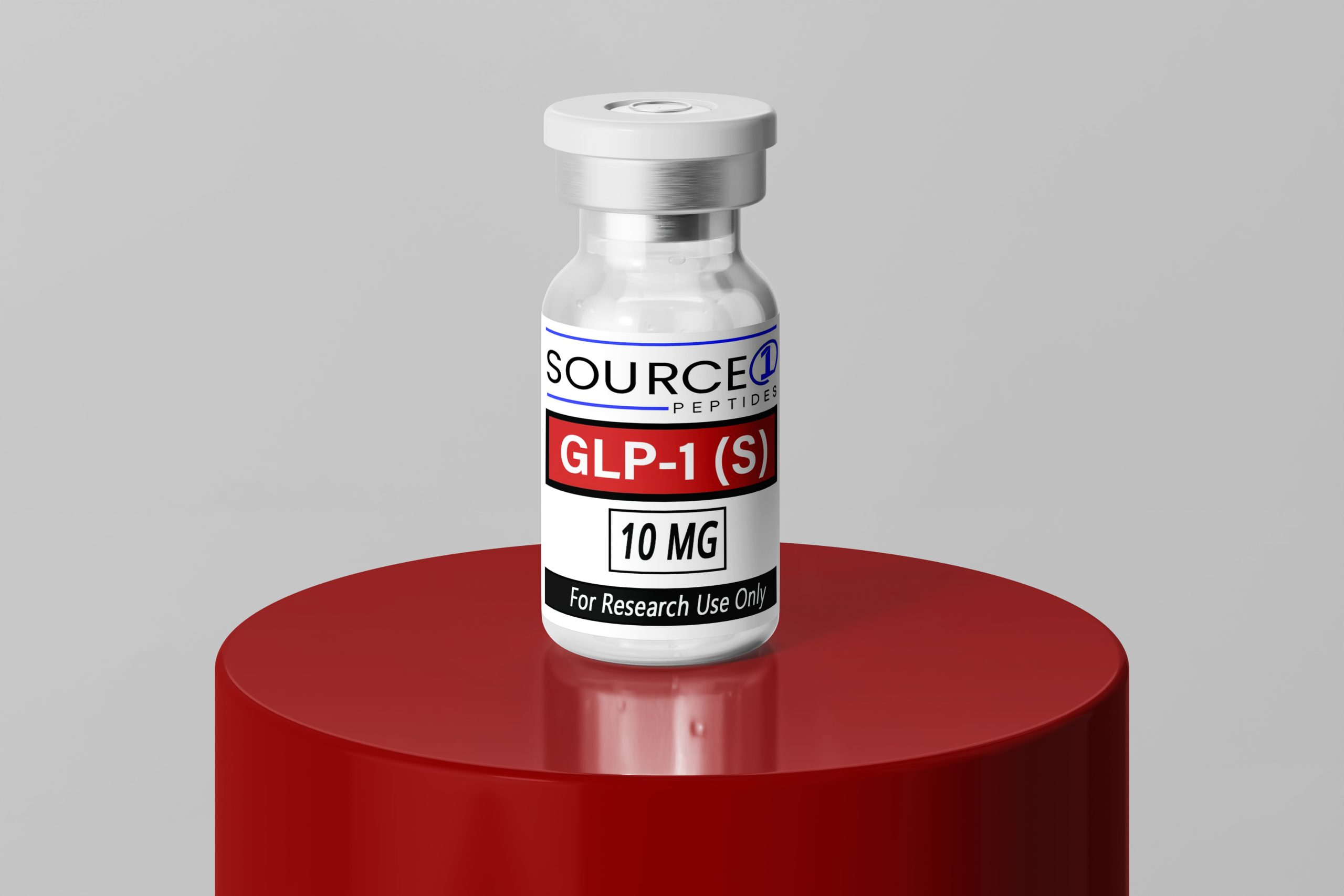
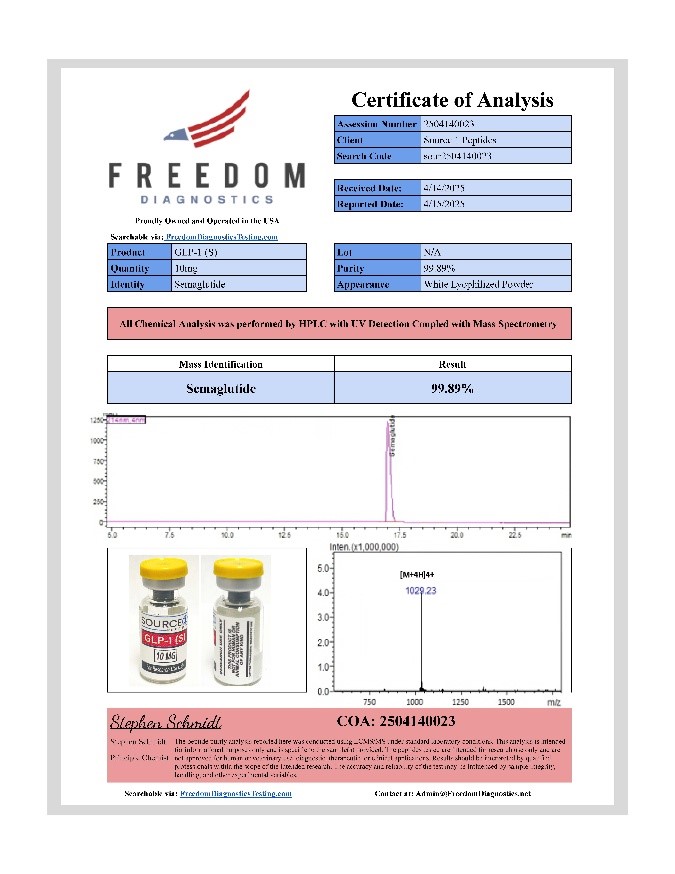
Semaglutide is a glucagon-like peptide-1 (GLP-1) receptor agonist that has garnered significant interest as a research compound due to its ability to regulate blood sugar, promote weight loss, and influence metabolic pathways. Originally developed for the treatment of type 2 diabetes, semaglutide’s unique properties have expanded its potential into research areas such as obesity, cardiovascular health, and neuroprotection. Its long-acting nature and multifaceted effects make it an important tool for studies focused on metabolic disorders and therapeutic interventions.
36 in stock
Semaglutide, a glucagon-like peptide-1 (GLP-1) receptor agonist, plays a key role in glycemic control and metabolic regulation. As a synthetic GLP-1 analog, it has a prolonged half-life due to structural modifications. These changes enhance albumin binding and increase resistance to enzymatic degradation. As a result, Semaglutide supports glucose homeostasis and appetite regulation.
Studies show that Semaglutide stimulates insulin secretion in a glucose-dependent manner and suppresses glucagon release. This dual action improves postprandial glucose levels and enhances glycemic control. Additionally, it slows gastric emptying, reducing rapid blood glucose fluctuations. These effects make Semaglutide a strong candidate for treating insulin resistance and dysglycemia in research studies.
Beyond glucose metabolism, Semaglutide also influences weight regulation by suppressing appetite through central mechanisms. GLP-1 receptor activation in the hypothalamus reduces energy intake, leading to significant weight loss.
Researchers continue to explore Semaglutide’s broader benefits, including cardioprotective and neuroprotective effects. Early data suggest it reduces inflammation and improves lipid metabolism. As studies progress, researchers aim to clarify its long-term safety and expand its research applications.
DISCLAI This PRODUCT IS INTENDED AS A RESEARCH CHEMICAL ONLY. This designation allows the use of research chemicals strictly for in vitro testing and laboratory experimentation only. All product information available on this website is for educational purposes only. This product should only be handled by licensed, qualified professionals.
Products sold on our website are meant for scientific research purposes only, designed for in vitro testing and lab experimentation exclusively. These products are not intended to be used as foods, drugs or cosmetics, any sort of bodily introduction of the products into humans or animals is strictly prohibited. They must also not be misbranded, misused, or mislabeled, or used for anything other than research and scientific investigation.
All the products you see on the website are being sold in a lyophilized powder state (freeze-dried), in a sealed sterile vial; and should be reconstituted.
The product’s label clearly states the amount of product a vial contains; some products are offered in different variations.
The products we are selling come in a sealed vial but require additional lab equipment for proper testing. This equipment includes
bacteriostatic water (for reconstitution), syringes and needles (to draw the product from the vial/apply bacteriostatic water), alcohol disinfection pads etc.
Though we make sure packaging, label, seals and writing does not differ from the product photos you see on our website, there is a chance for a minimal deviation.
The statements made within this website have not been evaluated by the US Food and Drug Administration. The statements and the products of this company are not intended to diagnose, treat, cure or prevent any disease. Source1Peptides is a chemical supplier. Source1Peptides is not a compounding pharmacy or chemical compounding facility as defined under 503A of the Federal Food, Drug, and Cosmetic act. Source1Peptides is not an outsourcing facility as defined under 503B of the Federal Food, Drug, and Cosmetic act. All products are sold for research, laboratory, or analytical purposes only, and are not for human consumption.


Reviews
There are no reviews yet.